
Research
Normative Walking Project
We are building a large dataset of walking in adults across the lifespan. In this project, we are collecting data from 500 individuals as they walk under a range of everyday conditions: at comfortable and faster speeds, while multitasking, and with reduced visual information.
This work allows us to understand what “typical” walking looks like at different ages and how it changes over time. By creating a reference database of normative walking patterns, we can better identify early changes in mobility, improve assessment tools, and support more personalized approaches to maintaining healthy movement with age.
We are actively recruiting for research participants aged 18-80. If you are interested in participating, please complete our screening form to check eligibility today.
Fear of Falling
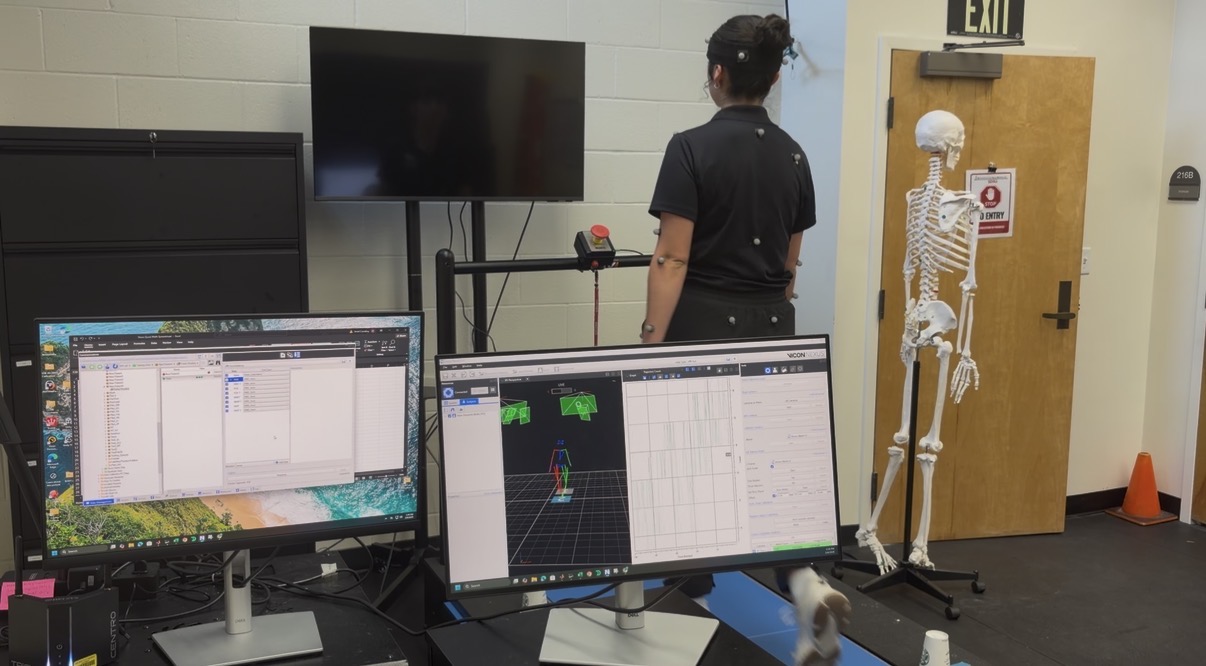
Fear of falling is common in older adults and can significantly impact how people move, often leading to more cautious (and sometimes less stable) walking patterns. In this line of research, we study how fear influences movement, balance, and decision-making during walking.
Using controlled laboratory tasks that safely challenge balance, we examine how individuals respond to potential instability and how fear alters these responses. Our goal is to better understand the link between psychological factors and physical movement, and to develop interventions that help people move with greater confidence and safety.
We are actively recruiting for research participants aged 18-35. If you are interested in participating, please complete our screening form to check eligibility today.
Cognitive-Motor Interference
Many everyday situations require us to walk while doing something else, like talking, thinking, or carrying objects. This research examines how the brain and body share attention during these “dual-task” situations and how that affects walking stability.
Across several projects, we study how different environments and task demands change the way people move. By measuring muscle activity, foot placement, and whole-body stability, we aim to understand how people maintain balance when attention is divided, and how these abilities change with age.
